.svg)
Trusted BY


.png)
.png)
.png)

.png)
Runtime as the Missing LayeR
Guardrails and Gateways give you intent. Runtime gives you everything else.
They filter inputs and audit configs. Neither tells you what the AI workload actually did once it started running.
.svg)
AI Guardrails /
Gateway
Intent
Understanding light AI usage within the org, with no visibility into what happens at runtime.

RoonCyber.AI Core Capabilities
AI Runtime Discovery
Surface every AI workload in production, including shadow AI, and trace every vulnerability it touches.
AI Visualization & Reporting
Turn runtime data into Security Graphs, executive dashboards, and instant remediation plans.
AI Prioritization
Focus on risks that are genuinely exploitable, not severity scores or alert noise.
Platform Capabilities
Everything you need to see, validate, and act on AI workload behavior
Runtime Detection & Validation
See and validate exactly what AI workloads execute, process by process, the moment it happens.
Full Execution Path Visibility
Trace AI agent activity from prompt to every downstream system, API, container, and data store.
Attack Path Context
Map lateral movement in real time and understand where AI-driven activity can propagate.
Business Impact Quantification
Translate runtime threats into financial exposure the board can act on, not just severity scores.
Runtime Copilot
Skip the dashboard. Just ask.
Get instant insights on any AI workload by asking Claude directly, powered by the RoonCyber.AI MCP Server.
LEARN MORE
Security Graph
Prioritize every AI attack path.
The RoonCyber.AI Security Graph gives you criticality into every AI execution path that's vulnerable, with business impact layered in.
LEARN MORE
Key Use Cases
Instantly see
AI Threat Detection
Identify anomalous workload behavior including unexpected file access, lateral network movement, and privilege escalation the moment it executes, not after a log review.
Shadow AI Discovery
Automatically surface unauthorized AI models, agents, and pipelines running in your environment before they create unmanaged risk.
Compliance Validation
Prove that AI workloads only accessed authorized resources and behaved within policy. Runtime evidence, not attestation.
Executive Risk Reporting
Convert runtime telemetry into financial exposure metrics your board and CFO can act on, not just technical severity scores.
How RoonCyber works
Built around continuous runtime observability.
Using eBPF, RoonCyber monitors processes, API calls, syscalls, and other kernel-level activity in real time with minimal performance impact. That visibility is the evidence to understand what happened, and the control to act when a threat is confirmed.
Learn about Real Runtime
01 · Discover
A real-time inventory
Every process, API, agent, and service that is actually running, not just what was configured or previously scanned. Shadow AI included.
02 · Visualize
The full execution path
Trace an agent from prompt to every tool call, container, database query, and cloud API it touches, process by process.
03 · Protect
Block. Contain. Remediate.
Kill the process, quarantine the workload, and revoke access at the moment of execution, with evidence behind every action.
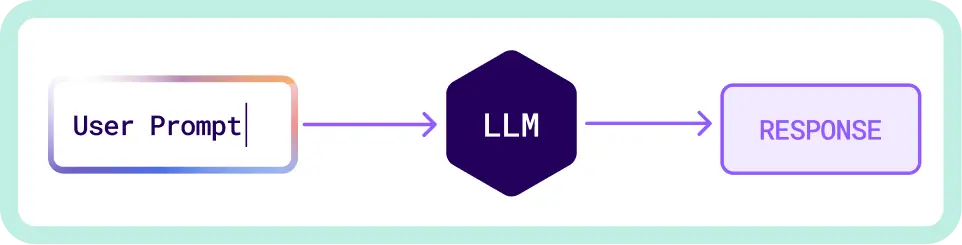
Most AI security tools stop at the prompt layer
RoonCyber.AI sees the complete execution path of every AI workload so you can block, protect, and remediate.
Focus areas typically include
- Prompt injection detection
- Model safety
- LLM guardrails
- Suspicious text analysis
What most AI Security tools see
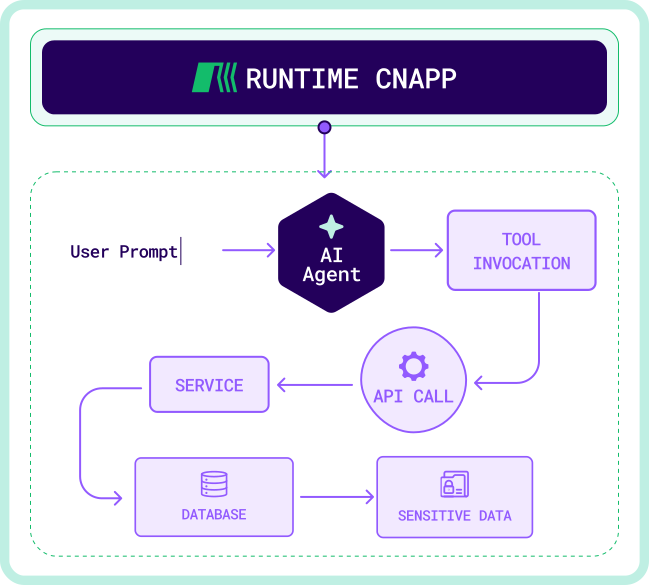
With Real Runtime, RoonCyber.AI Sees the Full Execution Path
By observing complete AI runtime activity, RoonCyber.AI provides visibility, containment, blocking and protection along every part of the execution chain:
- AI-driven process execution
- Tool invocation and API activity
- Network connections and service interactions
- Data access and file activity
- Infrastructure systems impacted by AI activity
Instead of analyzing hypothetical threats, security teams can detect the real consequences of AI-driven behavior.
Built for Your Team
The right insight for every role.
CIO
CISO
SOC
AI SEC ENG
AI Runtime Discovery
Live AI inventory in production, with ownership
Know every AI workload running across the org, who owns it, and what it touches — without waiting for a manual audit.
AI Visualization
One executive view of the whole AI estate
A single dashboard that shows AI risk, coverage, and business impact — built for the boardroom, not the terminal.
AI Prioritization
Critical AI risk handled first — scale with confidence
Understand which risks actually matter so your team can move fast without second-guessing the priority call.
AI Runtime Discovery
Finds shadow AI and unsanctioned agents instantly
Surface every unauthorized model and agent running in your environment before it becomes a breach you have to explain.
AI Visualization
Invisible agent behavior becomes defensible evidence
Turn runtime telemetry into audit-ready reports and security graphs your team can stand behind in any review.
AI Prioritization
Context and reachability equals control without slowdown
Stop chasing every alert. Know which exposures are reachable and act with confidence instead of noise.
AI Runtime Discovery
Enriched runtime signals into your existing pipeline
Feed kernel-level AI workload telemetry directly into your SIEM and alert pipelines with zero rearchitecting.
AI Visualization
Attack-path maps for fast triage and scoping
See exactly where an AI workload went, what it touched, and how far an incident could have spread — in seconds.
AI Prioritization
Reachability-scored alerts cut the noise
Every alert comes with reachability context so your analysts spend time on threats that can actually be exploited.
AI Runtime Discovery
Process-level detail on every tool and API call
See exact syscalls, process spawns, and API interactions for every AI agent — the ground truth your stack was missing.
AI Visualization
Trace full execution paths to debug and verify
Follow an agent's complete runtime path across containers, services, and APIs to verify behavior or isolate a bug.
AI Prioritization
Pinpoints which vulnerabilities agents can reach
Know which CVEs and misconfigurations are actually reachable by your AI agents, so patching effort lands where it counts.
Related Resources
view all

.png)