Secure what AI actually does — not just what it says.
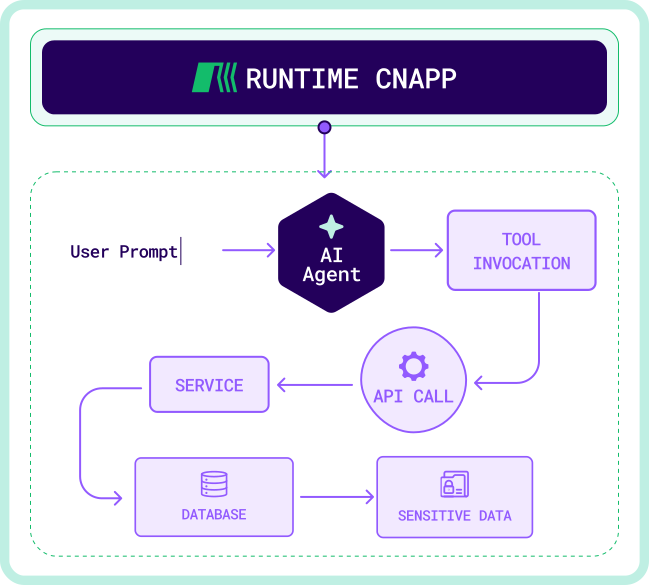
AI agents now invoke tools, call APIs, and reach data stores across your cloud. RoonCyber.AI watches the execution layer in real time — so a compromised agent can't quietly become a path into your infrastructure.
Every tool an agent calls, every workflow it triggers — captured as it executes.
AI-driven data access
Which data stores an agent reads or writes — and whether sensitive data is in play.
Container and cloud activity
The processes, syscalls, and network connections AI systems set off in production.
Autonomous workflows across the cloud
Where AI-driven actions reach — and how far an autonomous chain of events can go.
Why runtime
AI systems don't stop at the prompt.
A subtle prompt injection may slip past text analysis entirely. What matters is what happens next — and that only exists in runtime telemetry.
AI SECURITY TODAY
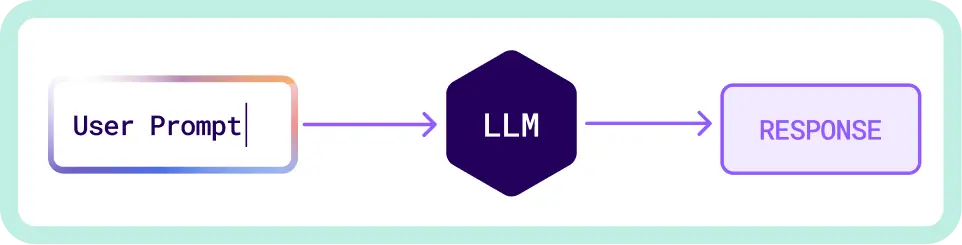
Prompt monitoring
Flags suspicious text. But attackers rarely use obvious instructions — and a clean-looking prompt tells you nothing about the data exfiltration that follows.
What most AI Security tools see
AI SECURITY NEEDED
Runtime workload security
Kernel-level sensors capture system calls, network connections, file access, and process execution — ground truth about what the agent actually did, not what it claimed.
How it works
Observe the execution layer. Correlate with the cloud. Contain in real time.
AI agents increasingly operate as automation systems with access to APIs, cloud services, internal applications, and sensitive data. If manipulated or compromised, attackers may indirectly access infrastructure and critical systems through those agents — creating new pathways into cloud environments.
02.
Visibility Lost at the Prompt
Most AI security tools focus on prompt injection detection, model safety, and LLM guardrails. While these approaches analyze text interactions with models, they rarely reveal what actually happens when AI systems execute actions across production infrastructure.
03.
Runtime Blind Spots in the Cloud
To truly secure AI workloads, organizations must understand how AI interacts with cloud infrastructure. Without runtime visibility, security teams cannot see how AI-driven activity moves across services, APIs, and data stores or understand the potential impact on critical systems.
Step 1
Runtime detection & validation
Kernel-level sensors observe what AI workloads actually execute — processes, syscalls, file access, network traffic — turning hypothetical threats into observed behavior.
Step 2
Attack path context
Runtime events are correlated against a live cloud inventory — compute, storage, services, data, identities — to map exactly where AI-driven activity can move.
Step 3
Automatic containment
Because monitoring sits at the system level, RoonCyber.AI can block connections, kill processes, pause containers, and revoke tokens — before the damage spreads.
Context
Connect AI activity to real business risk.
An agent in a vulnerable container with exposed credentials is a different risk than one in a locked-down environment. RoonCyber.AI correlates runtime behavior with cloud context to show which one you're looking at.
AI ATTACK PATHS
See how a compromised agent could move.
Which services, containers, and APIs the agent can reach
How AI-driven activity traverses layers of infrastructure
The full exploit path from prompt to sensitive data
Vulnerabilities and misconfigurations along the way
BLAST RADIUS
Understand the true scope of a compromise.
The blast radius of a compromised AI agent
Which resources are reachable and which data is exposed
Downstream systems carried along an autonomous workflow
Runtime threats translated into dollars and risk scores
“An AI agent is effectively a privileged automation script. If it's compromised, it behaves like an insider threat — and the only place you'll see that is the runtime layer.”
Response
From AI monitoring to AI defense.
Most AI security tools only generate alerts — and by the time an alert appears, the damage is already underway.
RoonCyber.AI detects abnormal AI behavior — an agent that suddenly scans internal services or reaches for secrets — and acts on it at the system level, automatically, while triggering an investigation.
Block malicious connections
Sever an agent's outbound path the moment it goes abnormal.
Kill suspicious processes
Stop a runaway AI-triggered process before it finishes its work.
Pause compromised containers
Freeze a container hosting a misbehaving agent for investigation.
Revoke tokens and API access
Cut the credentials a compromised agent is operating with.
What changes
One unified platform — cloud, application, and AI activity together.
15x
Faster MTTR
Runtime context turns AI incidents from guesswork into observed, traceable events.
90%
Fewer false positives
Validating real AI behavior against live execution — not prompt-pattern guesses.
45–50%
Lower TCO
One platform for cloud posture, runtime detection, and AI workload protection.
Built for AI in production
Contain AI threats automatically, in real time
Score AI-driven risk in business and dollar terms
Map AI attack paths across multi-cloud and Kubernetes
Detect the real consequences of prompt injection
Spot compromised agents behaving like insider threats

.svg)